Wednesday, June 15, 2016

Planning Assessments

Recently, I have been working closely with the Common Core Standard for Kindergarten Literacy:


Integration of Knowledge and Ideas:
CCSS.ELA-LITERACY.RL.K.7

With prompting and support, describe the relationship between illustrations and the story in which they appear (e.g. what moment in a story an illustration depicts). 

In this post, I will look at one of the objectives I created for this standard and establish three different types of formative assessments.

Objective

At the end of the lesson, students will be able to explain how each illustration gives clues about the characters, setting or events of the story.


Assessment #1: Think-Pair-Share
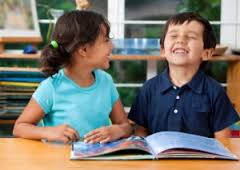

I believe it is important for students to express themselves and their thoughts. In the larger classroom setting, it is not alway easy for every child to talk especially if they are shy or hesitant to speak in front of others. Some students need more reflection time before they are able to answer a question as well and might feel on the spot if the teacher calls on them directly. It can also be challenging to have a detailed discussion if different students are throwing their ideas out there. Consequently, the first assessment I would like to do for this objective would be think-pair-share. For this assessment, I would ask them questions like "which illustration shows the setting of the story?" or "which illustration shows when Henry got his new puppy?" or "which illustration shows how Henry feels about...?" I could ask different pairs different questions about the same story so each group has to come up with their own answer and students are not repeating another group's answer.


First, I would  introduce the concept of think-pair-share, if we had not done it before. I would explain that first each student will think about the topic/question for about 2 minutes, then they will meet with their partner for about 5 minutes to discuss their the question and their ideas and, finally, they will share their ideas with the rest of the class. I will let them know they are allow to use paper to write down or draw their ideas, if they need or want to do so.

I would mix the reading levels up and mix different personalities to try to have the students balance each other out. I hope this would help encourage and motivate them as well. This assessment asks students to collaborate, communicate, use critical thinking skills, evaluate and use social skills.


Assessment #2: Matching

Since the first assessment is based on speaking, I would like for the second assessment to be different A visually-centered assessment could reach students who are more visual learners. With this assessment, the idea is to have students match images from a story discussed class with the words on the same page. The students will have to reflect on the illustration and what it shows in order to connect it with the words and the actions or events they describe. They must truly find a link with the words and the pictures. 


To keep it simple and focused, I would have images and text on a single sheet of paper from a story we discussed. The images on the left side in a column and the words on the right side in a column. The students would have to draw a line from the illustration to the correct words that describe the action.   

This assessment asks students to see the correlation between the illustration and the story text. I requires students to analyze, use critical thinking and productivity.

Assessment #3: Draw it


It would like the thirst assessment to be a little more in-depth. This assessment would have the students create their own illustrations to a very short story. I would give the students a short text, no more than three pages, that they have not read before. An example of a short story they could illustrate in three pages is:
Sam says “bye” to his parents. He leaves his house. He sees his friend, Emma. They walk to school. When they get to school they see all their friends playing in the playground. Sam and Emma go to the playground. The bell rings. All the kids line up behind the teacher to go inside. It’s time for school to start!
This assessment gives the students the freedom to be creative in their drawings while adhering to the story's plot. It asks students to use creative thinking, critical thinking, analyzing, problem solving, producing, productivity and initiative. After having been asked to do analyzing of the link between illustrations and story text in the first two assessments, this assessment has them create the link between the two. It will be interesting to see and have student share their different illustrations for the same story. 

Final Thoughts

In planning three assessments for the same objective, I wanted to plan a variety of assessment types that would reach different styles of learners and allow students to use an array of skills. I think that 1) think-pair-share, 2) matching and 3) draw it are all good ways to formatively assess the students as they are learning this objective. 

Sources

Dyer, K. (2013). 22 Easy Formative Assessment Techniques for Measuring Student Learning. Northwest Evaluation Association. Retrieved from: https://www.nwea.org/blog/2013/22-easy-formative-assessment-techniques-for-measuring-student-learning/


http://www.teachthought.com/pedagogy/assessment/10-assessments-you-can-perform-in-90-seconds/


http://www.readtennessee.org/teachers/common_core_standards/kindergarten/reading_literature/rlk7/rlk7_assessments.aspx


http://www.readwritethink.org/professional-development/strategy-guides/using-think-pair-share-30626.html


Sources for Images

http://www.k12reader.com/kindergarten-sight-words/

https://fr.pinterest.com/pin/464574517792375559/

http://www.123rf.com/photo_28423143_cute-little-preschool-children-drawing-with-colorful-paints-at-kindergarten.html


Thursday, June 9, 2016

Understanding and Applying Standards

This week I looked at the Common Core Standards through special lenses. Actually, I selected one Common Core Standard to work closely with, to dissect and contemplate. I decided on the following Common Core Standard:


For Kindergarten Literacy

Integration of Knowledge and Ideas:

With prompting and support, describe the relationship between illustrations and the story in which they appear (e.g., what moment in a story an illustration depicts).
I chose to concentrate on this standard because reading is such a fundamental skill and a foundation for all areas of learning. It really takes its roots in Kindergarten, which I will be teaching next year, and a student's first initiation can affect how he or she feels about reading and even about school in general. I love reading and sharing books and stories with others that one of my most ardent goals is to try to instill a love of reading, or at least an appreciation for it, in all of my students. Even though I love reading and want to share it with my students, just reading the standard does not give a teacher any major clues as to how to go about helping students learn about the relationship between illustrations and the story. To really get to the heart of the standard, there are three methods to use to be able to break it down and scaffold it into different lessons: Unpacking A Standard, Backwards Mapping and Writing Objectives. 

Unpacking A Standard 


I found this first step, unpacking a standard, really helpful in understanding the essence of the standard. In looking at the verbs in the standard you are able to know what students need to do and what types of activities they need to take part in, to achieve the standard. The nouns, too, tell you about the content the students should be learning. Knowing these hints, to look at the verbs and nouns, was so useful to me in breaking down the standard and fully grasping it. I was also better able to understand how I could create effective lessons for my students. For example, the only verb in the standard I chose to focus on is the verb describe. At a first read and taking the standard as a whole, it seems pretty basic. But, in pulling out the verb and really thinking about it, I was able to consider the verb in different ways. Describe is often oral, but it can also be a written description or a pictorial description. So, in pulling the verb out of the context of the standard, I was able to come up with different ways for my students to communicate the connection between illustrations and the story.


Backwards Mapping


I really liked backwards mapping. It was quite a natural process because it makes perfect sense to me. In thinking about the end goal, and what I wanted my students to be able to do with the content and accrue in  knowledge, was a great way to start. When you have an image in your mind of your students succeeding with the content, then you can plan more easily the proficiencies, activities and assessments that will bring them to that place. I found this process rather instinctive.  I also felt that it flowed nicely from the unpacking exercise. With the standard dissected, it was easier to see how you could build up to the end goal. 

Mapping and Writing Objectives 


Having already unpacked the standard and having looked at it through backwards mapping, it was a logical step in the process to write the objectives next. The first two steps really give you a deeper understanding of the standard itself as well as different ways to approach it. When we have our proficiencies in mind from backwards mapping, we can create concrete and clear objectives. I found Bloom's Taxonomy of Learning Domains very helpful when defining and writing my objectives.

G-O-A-L!!!

Overall, I found all three steps very valuable in the planning process. Independently, each strategy helped breakdown the standard into smaller, workable parts while together they created a scaffolded model of the standard in the form of objectives, proficiencies, activities and assessments. I will definitely use all three approaches when planning future lessons. 


Sources

http://www.corestandards.org/ELA-Literacy/RL/K/

Clark, D. (2015), Bloom’s Taxonomy of Learning Domains. Retrieved from http://www.nwlink.com/~donclark/hrd/bloom.html

NA. (2005). Effective Use of Performance Objectives for Learning and Assessment (For Use With Fink’s and Bloom’s Taxonomies). Teacher & Educational Development, University of New Mexico School of Medicine. Retrieved from http://ccoe.rbhs.rutgers.edu/forms/EffectiveUseofLearningObjectives.pdf

Sources for Images

http://www.slideshare.net/sknight/unpacking-standards

http://www.mapsandlanterns.org/backward-mapping/

http://nearsay.com/c/109347/85134/3-tips-for-massachusetts-real-estate-agents-on-creating-goals-for-2016

Tuesday, June 7, 2016

Standards and Backwards Mapping


When looking at the standards and classroom curriculum, it can seem quite daunting to plan lessons. But, it is helpful to keep the end goal in mind. Teachers can ask themselves, "what do I want the students to do with this content? or "What can they do with this content?" Therefore, it is best to starting planning your lesson beginning with the end. The reversed approach, called backwards mapping, can help teachers stay focused on the important aspects of content and not get bogged down skipping from one lesson to another without proper cohesion. 

Next school year, one of the grades I will be teaching is Kindergarten at an international school in France. The class I will teach is in the American section, so I will be following the Common Core Standards. For this exercise in backwards mapping, I chose the Common Core Standard:


Integration of Knowledge and Ideas:

With prompting and support, describe the relationship between illustrations and the story in which they appear (e.g., what moment in a story an illustration depicts).


I chose this standard because I am passionate about books and about reading. Personally, I
love reading and I want my students to be as excited as I am when they pick up a book. I believe that understanding a story through its images then through its words and understanding the connection between the two can be the foundation for a lifetime love of reading. Also, making connections between illustrations and the story can help students understand the different ways to read and tell a story. It can help develop students' critical thinking skills by opening their minds to the possibility of recognizing connections in other contexts and in other places, too. I think that these points are crucial to students and will help them greatly in the future. 


The Big Question: 
How do the pictures connect to the story?


Three Proficiencies

When students finish this unit based on CCSS.ELA-LITERACY.RL.K.7,  they should have the following proficiencies:

  • describe the relationship between illustrations and the story                   
  • identify the illustration that describes a specific event in the story and  identify what person, place or thing the illustration depicts 
  • explain how illustrations help them understand the story


Three Assessments


The assessments for this Standard can take the shape of different forms, whether oral through description or visual through drawing a picture or writing a sentence. Here are some ideas:

  • Student explains in his or her own words the importance of the illustration on a specific page in relation to the event, character or setting of the story on the same page.
  • Student is able to match pictures with sentences from the story when they are presented out of order.
  • Students can create their own images to accompany the story. Or, the student can create and image to illustrate their own writing. For example, "I like to play soccer" illustrated with the student playing a game of soccer with his or her friends. 

Three Activities


Activity 1

This activity focuses on discussion. The teacher reads the book "I Love My New Toy!" by Mo Willems out loud to the class. The story is about two friends, Piggie and Gerald. Piggie got a new toy and loves it until she things Gerald broke it. Another friend comes along and tell them it is a "break and snap" toy. In the end, Piggie and Gerald are happier playing with each other than with a toy. The teacher discusses the illustrations on each page and asks questions, like "How do you know Piggie is happy with her new toy?" or "How do you think Gerald feels when he breaks Piggie's new toy?" or "How do you think Piggie is feeling here?" The students describe the images in detail as they read the story.


Activity 2

The second activity builds on the first activity. The students pick their favorite part of "I Love My New Toy!" that they read as a class. They write a sentence about their favorite part. Then, they draw a picture to go along with their sentence. Finally, each student shares their sentence and picture with the class.


Activity 3

In the third activity, students will create a mini-book of their own. Taking images from "I Love My New Toy!" the students will glue them in the correct order in their mini-book. Then, on the last page, each student will write a sentence describing something he or she likes to do with his or her friend and draw a picture illustrating it.


In The End

After the unit has ended, we have come full circle. Knowing our big question and the proficiencies we would like our students to obtain from the beginning helps us achieve them in the end. Our lessons become more centered because we know our goal. 


Sources

http://artsedge.kennedy-center.org/%7E/media/ArtsEdge/LessonPrintables/grade-k 2/reading_illustrations_worksheet_rubric.ashx

http://www.corestandards.org/ELA-Literacy/RL/K/


http://www.edutopia.org/blog/common-core-map-backwards-jay-mctighe-grant-wiggins

http://www.readtennessee.org/teachers/common_core_standards/kindergarten/reading_literature/rlk7.aspx

http://rpdp.net/pdfs/NACS_ELA/Kindergarten/Reading%20Literature/RL.K.7.pdf


Sources for Images (in order of appearance)

http://learni.st/users/crystal.schmelzer/boards/3705-common-core-english-standards-reading-information-grades-9-10
http://www.newyorker.com/culture/cultural-comment/can-reading-make-you-happier
http://www.amazon.com/Love-New-Elephant-Piggie-Book/dp/1423109619
https://www.youtube.com/watch?v=wTK7435Wsmk
http://log3beganddevreadersemilyhelle.weebly.com/beginning-readerlimited-vocabulary-books.html
http://www.rmichelson.com/illustration/mo-willems/elephant-and-piggie/i-love-my-toy-p31/

http://www.poulton-le-sands.lancs.sch.uk/?page_id=139


Monday, May 23, 2016

Applying Classroom Rules and Procedures


In an effort to help the classroom run smoothly and for the students to follow classroom rules and procedures, students need to know there are consequences for their actions. We often think of consequences as a negative, a punishment, but consequences can also be positive reinforcement. These types of consequences can be essential in helping the students follow classroom rules and procedures. 

Positive Consequences

In my opinion, positive reinforcement is one of the most important things a teacher can do. Students need all the support they can get and knowing their teacher is on their side and rooting for them can often make all the difference. If students know that their teacher is paying attention to all sides of their learning, it can be very motivating for each students. There are different ways a teacher can rewards students' good behavior. 

Non-Verbal Signs  


Teachers can communicate very succinctly and clearly with positive gestures. If a student answers a difficult question with a thoughtful answer, the teacher can give a thumbs up sign to show a job well done. Or, if a student was nervous about a class presentation, the teacher could give a high five after the presentation is done. Even a smile and a nod can go a long way when encouraging students. 

Simple Verbal Affirmation

A teacher can also use simple phrases to compliment a job well done. For example, if the class came back from recess in an orderly way and sat down right away ready to get back to work, the teacher could say how impressed she was with the way they came into class quietly and ready to work. 

Tangible Recognition

In addition to non-verbal and simple verbal affirmation, teachers can develop a system in their class to award students with prizes. Teachers could have a weekly behavior chart that is rewarded with a certificate or tokens that add up to a class party. With this type of method, students can participate in their behavior charts and are able to self-reflect on their own classroom behavior. 

Communication Home

Another way to encourage students is to send a note or email to the parents or guardians telling them what a good job their child is doing in class. A teacher can also call home to tell the parents or guardians. It can be because the student did an exceptionally good job on a certain assignment or project or it could be because the child has done consistently well in class and the teacher wants to show appreciation. Involving the parents or guardians in this type of positive reinforcement is a great way to acknowledge the student's behavior and include the family. 

When and How 

Like the teacher in the video above, a teacher can decide when and how often to give positive consequences to students. It may depend on the situation or activity or the rapport she has with her students. In my opinion, however, I think positive reinforcement is an important part of the daily exchange between a teacher and her students. And, we see this with the teacher in the video working positive reinforcement into her dialogues with her students. The more they are held in a positive light, the better they will try at succeeding.

Negative Consequences

In addition to positive consequences, or in some cases when they are not enough, teachers have to know what steps they will take to stop unwanted classroom behavior. It is best if a teacher has a strategy already in place that she can follow when things go wrong. 

Be With It

The best way to handle undesirable behavior in the classroom is for the teacher to be proactive. She needs to be constantly aware of what is going on in the classroom. The teacher should move around the room often to notice behavior and attitudes in the classroom. She needs to let the students know that she knows what is going on. In doing this, she can often stop a disagreement between students before it starts. 

Non-Verbal Signs 


Similar in recognizing positive behavior, teachers can use non-verbal gestures to show that she is not happy about a student's behavior. She can simple look at the student with a serious expression or look at him or her and shake her head to show disapproval. The teacher can also put a hand up to indicate stop or put her finger to her mouth to show the student to be quiet. 

Direct Consequences

If withitness or non-verbal signs don't work, the teacher can move to the next level and give the student a direct consequence for unwanted behavior. The student could have at time-out, be asked to leave the class for a minute or stay a few minutes at recess. There is also the the method of overcorrection as described by Marzano who gives the example on page 144 of The Art and Science of Teaching of "a student has ripped the pages of a book and is required to repair the pages of all books in the class." With this type of punishment, the student is asked to overcompensate for the damage he or she has done. A teacher might find this type of consequence a good lesson for the student. All of these direct consequences require the student to take a moment to pause and be removed from the situation. 

We can't expect our students to have the tools to help them calm down or deal with an upsetting situation for them. It is helpful, like the teach in the following video, to go through some calming down steps. This could dramatically help students deal with difficult situations and take a step back.


Communication Home

When direct consequences do not work, then the teacher can often contact the student's home to discuss the situation with the parents or guardian. Often involving the caretakers of the child will help solve any behavior issues. 

When and How

Similar to positive consequences, the teacher much decide the appropriate time for each level of negative consequence. I believe that much of the disruptive behavior in class could be avoided if the teacher first uses positive reinforcement as well as exhibits withitness. This proactive approach can help avoid much undesirable classroom behavior. But, again, it's the teacher's discretion when and how to move to the next level. For example, a student who damages school property would need more than a non-verbal gesture as a negative consequence, they would need a direct consequence. And, action should be taken as immediately as possible for the student to really understand the seriousness of their behavior. 

Intense Behavioral Issues

If a student is having a hard time following classroom rules and procedures and is continuously misbehaving or being disruptive and the previous positive and negative consequences have made no change, then the teacher needs to develop a behavior plan. Often, a behavior plan can involve other teachers or school administration and the parents. The teacher can break down the problem in to pieces to be dealt with little by little. She can move the student to another part of the classroom or close to her desk. She can also give him or her a behavior chart  that the student can use daily to track his or her classroom behavior. The student also may need to join a school group on anger management or bullying. Having a class buddy could also help the student follow the classroom rules and procedures. 


When and How

Again, it is the teacher's decision when to implement a behavior plan. After failed attempts at positive reinforcement along with failed attempts at negative consequences, the teacher must move to the next level and implement a plan. I would argue that the sooner the better so the class can move on and not continue to be disrupted by the student. 

Flowchart 

To help teachers have a clear idea of what they can do in the classroom and to remember the different steps of positive and negative consequences, a flowchart is a good visual to have on hand. 


We can see from the chart that positive reinforcement can happen at any time. And, it should happen as often as possible. It need not follow a step by step process, for example the teacher can go from non-verbal gestures to a call home to praise a student's behavior to his or her parents. However, with negative consequences, it is best to build up to stricter consequences, hoping that with each step, the student's behavior will correct itself. 

Summary

Overall, the best thing we can do as teachers is to give positive reinforcement to our students. Additionally, giving clear expectations and having a clear set of classroom rules and procedures available for all the see are both critical to helping students succeed in the class room behaviorally and academically. Knowing our students will help us know when to use positive or negative consequences. Each day in the classroom is different and we must be ready for all types of situations. Being open about expectations and consequences is a step in the right direction for applying classroom rules and procedures.


Sources


Marzano, R. J. (2007). The Art and Science of Teaching. Alexandria, VA: Association for  
    Supervision and Curriculum Development.

Sources for Images (in order of appearance)

http://www.flowers.mps-al.org/?PageName=TeacherPage&Page=12&StaffID=177473

https://ithemes.com/purchase/thumbsup/

http://www.teachthis.com.au/products/view-category/link/Student-Awards/id/14/

http://www.slideshare.net/Zareen17/non-verbal-communication-in-organizations

http://www.ingredientsofoutliers.com/setting-up-your-classroom-for-success-proactive-classroom-management/

Sources for videos

https://www.youtube.com/watch?v=8ml1tih5zSY

https://www.youtube.com/watch?v=3DQ4NBYX-EE

Wednesday, May 11, 2016

Creating High Performance Learning Environments


As teachers, we want our students to succeed. We know our behavior in the classroom affects how they learn, so we must be positive and consistent. Our classroom must be a safe place for all students. Students will thrive in the right environment. And, in the right environment, we can apply different teaching methods to help students do their best. I recently watched three videos of very different teaching techniques that I would like to share with you.

Video # 1: The Roller Coaster Project (video)


This video shows a STEM (Science, Technology, Engineering and Math) subject-based project. In the video we see 5th graders working in groups collaboratively. They are expressing their ideas, problem-sovling, creating and building. The teacher is seen moving from group to group interacting as necessary but it is clearly a student-centered project.

     Academic Expectations

It is clear throughout the different sequences of the project that the teacher has high expectations for her students. She is continuously engaging with them in dialogue or asking deep questions. Every step of the project has a specific purpose, for example, the students may not just take the elements they need to build their foam roller coaster models, they must purchase each piece with a set budget they have been given. The students not only stay on task, but they seem genuinely interested in the project. They transition from sequence to sequence with ease, moving from the chime to a four minute individual sketch to a group sketch and then on the the model simulator with no difficulties. I really like the role she takes in her classroom with her students and that she lets the students discover their project on their own in their groups.

     Behavior Expectations

We don't see in the video how the teacher has established behavior expectations with her class, but simply from seeing the way she acts in the classroom with them is very telling. She models the behavior she would like to see. She shows respect to all of her students by listening to them. She maintains eye contact and smiles a lot. She really lets them take the lead in their learning but we see her on the side accompanying them.

     Norms & Procedures

The norms and procedures for this project can be seen at norms. The norms revolve around tardiness, missed work, electronic devices and restroom procedures. The rules are very clearly stated and instill the seriousness of the project. In terms of daily procedures, the teacher has set up certain times and places in the classroom where the students know what is expected of them. For example, during chime, the students sit at one big table facing each other and one person from each group is in charge of sharing something with the rest of the class. All the students know what they are supposed to do.

Video #2: 3rd Grade Chinese Math Lesson (math)

In this video we see a teacher speaking in Chinese to her students who are repeating Chinese words back to her. They are chanting or saying words. With all the students sitting on the floor in front of the white board, it is an animated lesson and every student seems to be engaged in what is going on in the lesson.


     Academic Expectations

The teacher has established academic expectations through her interactions, both verbal and physical. She seems to be continuously talking, moving her hands and walking around. She expects the students to repeat the answers out loud. They follow her cues and sing or clap when they are supposed to. She seems to correct them or move on to other students when an answer is not correct. She expects her students to stay focuses on the lesson and participate in helping to find the correct answer. While it seemed like much of the learning was done by rote, the students did seem engaged and rote learning can be good with certain math concepts like multiplication.

     Behavior Expectations

In the video, we see the teacher correct unwanted behavior with hand gestures. For example, she puts her finger to her mouth when she wants it to be quiet. She expects them to listen when she is talking. She is the leader of the class and they are supposed to follow her lead.

     Norms & Procedures

Through her actions, the teacher has set up expectations. It seems that when the students are sitting on the floor in front of the white board, it is a time to listen, watch and repeat. Again, she does this with her verbal and physical interactions with the students.

Video #3: Whole Brain Teaching (WBT)

I had never heard of Whole Brain Teaching before and, in this video, we see a few short sequences of different techniques of this method. In one, we see the students repeating everything the teacher says. We also them repeating the class rules along with gestures. At one point when she asks them to turn to page 7 of their Geography book, they all repeat page 7 over and over until everyone is on the right page. There is also a "crazy professor" sequence when in pairs, one student reads the book while the other one mimes what they are saying. The last technique was speed reading. It seems that the basis of WBT repetition and movement.

     Academic Expectations

The academic expectations seem revolve around all students working at the same pace, which may allow slower students to keep up with higher-achieving students. The WBT method also keeps the students engaged because they always have to be ready to participate and repeat or respond verbally or in motion to what the teacher says. Personally, I didn't see in this short video how this method would really establish high academic expectations. Much of the repetition and movement seemed more distracting than challenging the students with deep questions and encouraging them to strive to do their best.

     Behavior Expectations

In repeating words and movement, all students are treated equally. They are expected to follow the teacher's lead. With all this repetition, the teacher is consistent in her classroom behavior and she models how the students are supposed to act.


     Norms & Procedures

In the video, the class repeats two of the class rules: students must be in their seat when the tardy bell rings and they must read each other with dignity and respect. These are rules that were most likely laid out at the beginning of the school year by the teacher. Additionally, with the WBT method, students know that they are to repeat what the teacher says or they have an automatic response to what she says.

Summary: In My Classroom

Watching these three very different videos really makes you reflect on what you already do in the classroom and what you could do to improve. Out of the three videos, I found the Roller Coaster project video the most inspiring. The students were not repeating, like in the other two videos, but they were collaborating and creating. They were explorers and inventors. It was great to see them working seamlessly together. These students were genuinely interested in their project and, although it was complex and with many different parts, they rose to the expectations set by the teacher. In the second and third videos, they students were not being creative or collaborating to produce work of their own. It seemed that these teachers' expectations were lower for their classes because they did not give freedom to their students to learn on their own.

Next year, I will be teaching in a special setting. I say special because it is not the traditional elementary school set-up. I will teach in an American-based program within an international school in France. Because the students spend around eighty percent of their school week in their French classes,  they are only in the American program for two half days a week -- one morning session and one afternoon session for a total of 6 hours per grade level per week. So, I will have three classes of three different grade levels. For example, I could teach Kindergarten, 2nd grade and 5th grade.  There are generally three types of students in this program: 1) those who come from American families and who are expatriates France, 2) those who come from French-American families with one parent from the U.S.A. and the other parent from France and 2) those who are French or another, usually European nationality, and who have lived in the U.S.A. for an extended period of time and speak English.


Because I will be teaching students from different cultures and backgrounds, I believe it is beneficial  for my students to be able to share who they are and where they come from with the rest of the class. This can be as simple as expressing their opinions during a group project or doing a group project on different cultures. For me, I think a project-based learning could work well in all elementary grade levels if the project was tailored to each specific grade level. I  think the more choices you give students as well as collaborative and student-driven opportunities, the more they will rise to meet high academic expectations. If they are empowered in their learning, then they will be interested and engaged. They will succeed.

In terms of more repetitive techniques,  I think they could also work in all elementary grade levels as adjust to each specific grade. But, in my opinion, these are not the techniques that will raise them up to meet my high academic expectations. The WBT method would be good for classroom management and using between transitions or to check that all students are paying attention. And, chants or songs, like seen with the Chinese math lesson could work as well in reviewing vocabulary or a specific topic with a class. But, again, I do not believe that these videos are the basis for creating high expectations in the classroom.

In the end, I can see myself taking something away from each video. I think as teachers we need to be adaptable and, in doing so, we need to vary our own teaching methods. Overall, though, we, as teachers, can never go wrong when it comes to empowering  our students with collaborative and project-based learning.

Sources

Chen, C. (2011). 3rd Grade Chinese Math Class. YouTube. From: https://www.youtube.com/watch?   v=h7LseF6Db5g

Mace, R. (ND). Roller Coaster Lab. Glogster. From: http://pilotrobertmace.edu.glogster.com/roller- coaster-lab/

Migdol, D. (2012). Roller Coaster Physics: STEM in Action. Teaching Channel. From: https://www.teachingchannel.org/videos/teaching-stem-strategies

Shayne, R. (2011) Whole Brain Teaching. YouTube. From: https://www.youtube.com/watch?v=8iXTtR7lfWU&feature=youtu.be

Sources for Images (in order displayed)


Quote: http://carloscody.tumblr.com/post/143423671218/distractions-come-to-rock-you-to-sleep-and-take

Rollercoaster: http://www.drawingnow.com/tutorials/118973/how-to-draw-a-roller-coaster-for-kids/

Math: https://play.google.com/store/apps/details?id=com.chilisapps.android.mathAttack

Follow Directions: http://gingersnapstreatsforteachers.blogspot.fr/2012/08/whole-brain-teaching-set-preview.html

American flag: https://en.wikipedia.org/wiki/Flag_of_the_United_States

French Flag: https://en.wikipedia.org/wiki/Flag_of_France

Friday, April 29, 2016

Positive Classroom Climate


Why is it important to create a positive classroom climate of caring and concern for all students?

Students learn better when they are comfortable in class. For students to feel at ease and ready to learn, the teacher needs to be armed with the necessary tools to create a positive and comfortable classroom climate. Classroom management and a positive classroom climate go hand in hand. For students to be open to learning, they need a positive atmosphere in the classroom and for this positive atmosphere to exist, the classroom needs to be managed well by the teacher. Class rules are important so that students know what is expected of them but, on a deeper level, there are ways teachers can influence the class environment and positively affect student learning. Students are individuals and teachers need to see them as unique and special in their own ways. Because students can come from different backgrounds, types of families and cultures, teachers need to be aware of who they are and how to celebrate the differences within the classroom. Making each student comfortable and at ease in class will create a positive atmosphere that will make managing the class easier. It is therefore vital to create a classroom environment that reflects the importance of caring and concern for students from diverse ethnic, racial and cultural groups.

To create a positive classroom climate, there are three main ingredients: the role of the teacher, the classroom environment and set-up and teaching strategies.


The Teacher's Role

The teacher is the model who sets the example for all students. From cultural diversity to bullying and gender equality, the teacher must take an active role in creating equality for all students in the classroom. The teacher's attitude and behavior is the first thing students notice. From the first day of class, students can be made to feel at ease with a friendly introduction by the teacher who shares appropriate information about her or himself. If the students feel a connection with the teacher in knowing something about her or him, then they will be more invested in and encouraged to do well in class. The teacher should be consistent, approachable, smile and listen to the students. She or he needs to show respect for each and every one of the students in the class. Starting with the correct
pronunciation of each students name, the teacher exhibits respect for culture and the individual student. The teacher also should be aware of different cultures and the diversity that is within her or his own classroom. There should be an open dialogue about bullying and, again, the teacher must set the example. This can be reflected in the way she or he equally treats all students. Consistency is a key element to showing equality in the treatment of students while also modeling respect for others.

The Classroom Environment & Set-Up

There are several ways a teacher can arrange the classroom and create a welcoming environment. The teacher can dedicate a part of the wall or a bulletin board to the students' work. This enables students to be proud to share their work with their classmates. Another bulletin board can be dedicated to sharing information about their culture, families, background or interests. Letting students have a say in what is displayed in their classroom really helps make it their own space. In addition to students' bulletin boards, the teacher can use other wall space to display symbols representing social messages like anti-bullying posters. These visual messages reinforce the teachers welcoming and accepting behavior she or he wants to transmit to her or his students.

In terms of seating, the teacher can opt for a seating set-up that encourages collaborative work. Placing student tables such a way that allows students to sit around them and face each other, instead of in rows facing the front of the classroom, promotes group work and puts the focus on the students rather than the teacher.


To further ensure a comfortable classroom climate, the teacher invites students to participate in creating certain classroom policies. She or he can work with the students to develop the class rules. With student involvement, the class rules become an active collaboration rather than a passive list to follow. Students are more likely to be engaged and dedicated to adhering to them. Additionally, creating a class plan for anti-bullying with the students, again, involves them in the process and makes it more meaningful and important to them. This idea is highlighted on pages 128-129 of The Art and Science of Teaching by R. J. Marzano

Clearly, rules and procedures do not have to be generated by the teacher. Another option is to devote class time to designing rules and procedures from the ground up. In other words, the teacher shifts responsibility to the entire class for crafting their rules and the specific procedures associated with them. Quite obviously, this takes much more time. The interaction usually begins with a whole- class discussion regarding the characteristics of a class that facilitates learning. The teacher might then organize students into small groups that generate general rules that should govern behavior. In the context of a whole-class discussion, the students and teacher aggregate these lists into a single list. Students then identify the specific behaviors and procedures associated with the general rules. Although opening up the design of classroom rules and procedures to students certainly takes substantial time, it might significantly increase student ownership of the management of the classroom.
A final thought on creating a positive classroom environment for caring and concern would be to have a weekly circle time exchange. This could be at the end of the week or beginning of the week when students gather in a circle with the teacher to discuss how they feel, what went well during the week, what they would like to change in the next days or weeks. It would be an opportunity for students to speak freely and respectfully with each other about themselves or the class.

Teaching Strategies

I believe that the teaching strategies used should aim for everyday inclusion. The teacher should be culturally aware and conscious of gender equity. For example, actively choosing stories or books that represent different types of people and different gender roles. This can continue in the way in which students are grouped--not boys on one side and girls on the other, but group them by birth month or the first letter of their first name.

Also, the types of lessons the teacher does are very important. For example, doing lessons that focus on celebrating these differences  like "All About Me..." (pp. 11-13) or "That's Just For..." (pp. 40-41) in Ready, Set, Respect! GLSEN's Elementary Tool Kit, which give teachers the chance to focus on their curriculum but with added perspective of important social lessons.

In addition to these specific ways to integrate lessons on gender and cultural difference, the teacher can create a positive environment by making it learner friendly. Learner friendly means engaged and involved students. To keep students engaged, the teacher should remember to adapt the lessons when necessary. If he or she sees that they are getting fidgety or tired, the lesson can be paused and student can have a moment to stretch or stand up and wiggle around a little. Engaged students are those who take ownership of their learning. Student-centered and student-directed activities are the best way to to engage students.

The teacher should also remember that giving the students clear and appropriate expectations. If the students know what is expected of them, they will be more likely to rise to meet those expectations. Furthermore, giving students the opportunity to create goals for themselves brings them into the learning process, making it more student directed. The teacher can also provide rubrics for self-assessments, peer assessments and teacher assessments. Allowing the students to have time to reflect on themselves and their classroom experiences and giving them a way to provide constructive feedback will involve them even more in the positive management of the class.

My Thoughts

I was born in Philadelphia but grew up in Texas with parents who were from California. I never fully fit in because I was not born in Texas and that fact was often pointed out to me growing up. In school, there were no efforts made that I specifically remember to include different ethnicities or differences of any kind. Looking back, it seems like the teacher followed the prescribed curriculum and there was not an awareness, as there is today, about the importance of inclusion, acceptance and celebrating differences. I think one of the reasons why I left Texas for my university studies and then went on to travel extensively was because I never felt anchored in Texas. I always felt like I didn't belong. I think about my students today and I wonder if they feel the same thing. I am currently teaching a group of 4th and 5th graders in an American section of an international school in France. Some of the students are American, some are French but lived in the States and some are third nationalities but happen to speak English. I think for this mix of cultures and backgrounds, I need to be very aware of what is going on in the classroom between the students. Additionally, today, I think bullying and cyberbullying are becoming bigger issues among students. I think prevention is the best way to stop it. With my students I will actively speak with them about it, let them know I am an advocate for them and develop an anti-bullying plan with them. I will also follow the outline of ideas set out in this blog. Modeling respect, compassion, friendliness and acceptance in my behavior while backing it up in the physical classroom environment and set-up as well as in the lessons I teach. I need to know my students, make them feel comfortable and do my best to engage them. Students learn best when they are interested, engaged and at ease. My job as teacher is to facilitate and find ways to promote caring behavior and appreciation of differences while allowing my students to accomplish all that they can.


Sources

Clark, D. (2015). Bloom’s Taxonomy: The Affective Domain. Big Dog & Little Dog’s Performance  
Juxtaposition. Retrieved from: http://www.nwlink.com/~donclark/hrd/Bloom/affective_domain.html

Marzano, R. J. (2007). The Art and Science of Teaching. Alexandria, VA: Association for  
    Supervision and Curriculum Development.  

McGarry, R.A., Friedman, L., Bouley, T. & Griffin, P. (2012) Ready, Set, Respect! GLSEN's Elementary  
Toolkit. Retrieved from: http://www.glsen.org/cgi-bin/iowa/all/educator/index.html


Scharff, A. (2014) PDA Critical Practices for Anti-Bias Education. Montgomery, AL: Teaching Tolerance.  
Retrieved from: http://www.tolerance.org/sites/default/files/general/PDA%20Critical%20Practices_0.pdf

Images (in order displayed):

http://mymusingoflearning.blogspot.fr/2015/10/establishing-positive-classroom-climate.html

https://fr.pinterest.com/tchrsmktplace/tuesday-s-tip-for-teachers/

http://classroomideassoliver87.blogspot.fr/2014/09/setting-up-positive-classroom.html

http://perspectives.ctf-fce.ca/en/article/3064/

https://ioseducation.wordpress.com/2013/05/30/ipads-and-class-room-management/